
Community Development

Community Development provides educational programming to assist leaders, communities, and organizations realize their fullest potential. We work with communication to build the vitality that enhances their quality of life and enriches the lives of their residents. In short, the Community Development Institute plants and cultivates the seeds for thriving communities and organizations.
Paul Roback, Community Development Educator
A three-hour staff development workshop (Real Colors) where Village of Fredonia elected offi cials and employees increased their ability to recognize their strengths and the strengths of others, build rapport quickly with others, understand how others process information, and modify their communication to connect with others. The workshop is intended to help workplace teams work together more effectively.
Since 2014, Community Development Educator Paul Roback has facilitated Real Colors workshops in response to organizations and local governments expressing a need for staff development in effective communication and team building. These goals align with the outcomes for Real Colors, which is an interactive three-hour workshop that teaches skills to understand human behavior and improve communication with others. Recently, the administrator for the Village of Fredonia requested that Paul provide a Real Colors workshop for the Village board and staff. In response, Paul taught a three-hour workshop for 18 elected offi cials and staff. Participants completed the Real Colors assessment to understand their personality type, participated in small group conversations, and gained insights on the four personality types through large group discussions. Participants (n=18) completed end of session evaluations. From attending the workshop, 95% increased their ability to recognize their strengths and their ability to recognize the strengths of others. Additionally, 95% increased their ability to build rapport quickly with others, 95% increased their ability to understand how others process information, and 72% increased their ability to modify their communication to connect with others. Overall, participants evaluated Paul’s facilitation of the workshop as a 4.9 on a 5-point Likert Scale (1=poor and 5=excellent). When asked how they will use what they learned from the session, one commented “I better understand my village coworkers and can communicate easier.” Commenting on Paul’s facilitation, one participant said, “The presentation was interesting and engaging.”
4-H Youth Development
Positive Youth Development prepares the youth of today to become the effective, empathetic adults of tomorrow. Our research-based youth enrichment programs. 4-H clubs, camp and after-school programs give young people the hands-on experience they need to develop an understanding of themselves and the world.
Abi Quinlan, 4-H Program Educator
A youth leadership and program planning effort for Ozaukee County 4-H Horse & Pony youth, where participants explored youth leadership models, provided feedback on program needs, and helped determine the future structure and activities of the group. Through this effort, youth voice was centered in decision-making to strengthen youth-adult partnerships, increase youth ownership, and build a more sustainable 4-H project
Feedback from youth members, parents, and volunteer leaders identifi ed a need for change within the Ozaukee County 4-H Horse & Pony project. Stakeholders expressed concerns regarding program structure, member engagement, leadership opportunities, and the long-term sustainability of the group. As the project considered its future direction, there was a need for a process that refl ected Wisconsin 4-H’s commitment to youth-adult partnerships and ensured that young people had meaningful opportunities to infl uence decisions affecting their program experience. The Ozaukee County 4-H Educator facilitated a program reset process that centered youth voice while engaging youth, parents, and volunteers in discussions about the future of the Horse & Pony project. Youth participated in a survey and educational discussions to identify program strengths, challenges, and priorities for improvement. Participants learned about various youth leadership and governance models used within 4-H programs and considered how those models could support the goals of the group.Using feedback gathered through surveys and discussions, youth members were empowered to help determine the project’s future structure, leadership opportunities, and program priorities. Youth also identifi ed educational and social activities they would like incorporated into the upcoming program year. The educator guided the process to ensure decisions refl ected youth perspectives while building understanding among volunteers and families about the value of shared leadership and youth-adult partnerships. Youth members, parents, and volunteers contributed to a shared vision for the future of the Ozaukee County 4-H Horse & Pony project. Through the process, youth gained experience in providing input, evaluating options, and participating in decisions that affect their organization. Youth selected leadership approaches and identifi ed program priorities that will guide the group’s work in the coming year.The feedback collected has established a foundation for strengthening youth leadership within the project and increasing youth ownership of program decisions. The effort also highlighted opportunities to better defi ne volunteer and youth leadership roles, supporting a more sustainable organizational structure. Future training and coaching opportunities for youth leaders and adult volunteers will focus on developing effective youth-adult partnerships and shared decision-making practices. These efforts are expected to increase member engagement, strengthen leadership capacity, and create a project culture where young people are empowered to lead while being supported by caring adult volunteers, consistent with the goals of Positive Youth Development and Wisconsin 4-H.
Agriculture
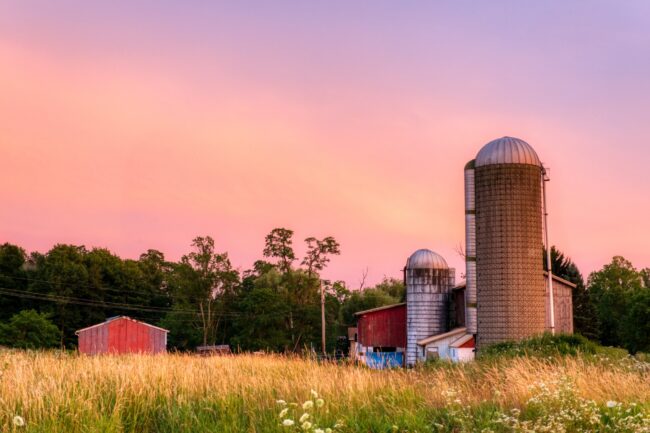
If it happens on a farm or in a field, the Extension Institute of Agriculture works with you to achieve better results. Our innovative dairy management programs range from genetics to farm and business management. Extension researchers work hand-in-hand with row crop, forage, and fresh produce growers to provide best practices for every aspect of the growing phase. We also advise communities on using sustainable practices to create inviting spaces free from invasive species.
Crops I Manuel Pena, Regional Dairy Educator
A corn silage dry-down event for dairy farmers and forage growers in the region, where participating farmers from Ozaukee County can submit their corn samples to assess their dry matter content. This information helps determine the appropriate time to harvest their corn for silage and maximize forage quality.
Dry matter (DM) data is important because it helps dairy farmers determine the appropriate harvest timing for corn silage. Harvesting at the proper DM content helps achieve good fermentation, preserve nutrients, reduce storage losses, and maintain consistent forage quality. This event is an opportunity to submit corn silage samples and assess their dry matter content during three weeks, every Wednesday from August 26th to September 9th. The results provide participants with information to evaluate harvest timing and make more informed decisions to maximize corn silage quality and preserve nutrients. The work provides participants with timely dry matter data that helps them evaluate corn silage harvest timing. This information supports more informed harvest decisions, with the goal of maximizing corn silage quality and preserving nutrients for consequent dairy diet formulation.