
Community Development

Community Development provides educational programming to assist leaders, communities, and organizations realize their fullest potential. We work with communication to build the vitality that enhances their quality of life and enriches the lives of their residents. In short, the Community Development Institute plants and cultivates the seeds for thriving communities and organizations.
Paul Roback, Community Development Educator
A workshop for board members of the Port Washington-Saukville School District Foundation where participants learned about board roles, responsibilities, and tools that enable nonprofits to function at a higher-level. A facilitated conversation allowed participants to identify the next steps to strengthen board operations.
Paul was contacted by the board president of the Port Washington-Saukville School District Foundation, a local nonprofit, to provide guidance on next steps for an organization that had been inactive for several years. With new board members, revised bylaws, and new donations, the organization was looking for insight on “the best way to structure things going forward.” After meeting with the board president, it was determined that the organization would benefit from understanding board member roles and responsibilities, as well as strategic planning. Paul taught a 1-hour workshop to seven board members. Content included an overview of the non-profit sector in Wisconsin, board member roles and responsibilities, and tools for high functioning boards. Additionally, Paul facilitated a process that allowed participants to identify where they need to be a year from now and what they need to accomplish in the next 30 days. Through evaluation (n=6), 100% of participants agreed they gained knowledge on the nonprofit sector, 83% agreed that they gained knowledge on board roles and responsibilities, and 100% gained knowledge on tools to use for high functioning boards. Additionally, 100% agreed that the group reflection activity increased their ability to identify next steps for future implementation. Participants evaluated Paul’s facilitation as a 5.0 on a 5-point Likert Scale (1=poor and 5=excellent). One participant commented, “This session was an amazing first step toward a stronger foundation group.”
4-H Youth Development
Positive Youth Development prepares the youth of today to become the effective, empathetic adults of tomorrow. Our research-based youth enrichment programs. 4-H clubs, camp and after-school programs give young people the hands-on experience they need to develop an understanding of themselves and the world.
Abi Quinlan, 4-H Program Educator
A regional workshop for adult and youth 4-H Animal Sciences leaders, where participants will explore strategies for creating high-quality project learning experiences, utilizing experiential education methods, and strengthening youth-adult partnerships to enhance Animal Sciences project programming. Through this effort, leaders will be better equipped to support positive youth development and engaging project-based learning opportunities in their local communities.
4-H Animal Sciences projects rely on both adult volunteers and youth leaders to create meaningful educational experiences for young people. While many leaders bring enthusiasm and project knowledge, they often seek additional support in youth development practices, experiential learning methods, and strategies for facilitating engaging project meetings. There is a need for regional learning opportunities that strengthen the skills of both adult and youth leaders, build leadership capacity, and encourage collaboration across county lines to support high-quality Animal Sciences programming. To address this need, the Project Learning Labs series is being developed to provide project leaders with practical tools and resources for facilitating effective project learning experiences. The first session, focused on Animal Sciences projects, will bring together adult volunteers and youth leaders from Columbia, Dodge, Fond du Lac, Washington, and Ozaukee Counties. Participants will engage in interactive learning experiences focused on experiential education, youth-adult partnerships, project meeting planning, and strategies for fostering youth engagement and belonging within Animal Sciences programs. The session will also provide opportunities for networking and sharing ideas among leaders from multiple counties. Participants are expected to increase their knowledge of youth development principles, experiential learning practices, and project leadership strategies that can be applied within local Animal Sciences project groups. Adult volunteers and youth leaders will be better prepared to facilitate engaging, educational project experiences that support both animal science learning and life skill development. By strengthening the capacity of youth and adult leaders, this effort is intended to enhance the quality and sustainability of local 4-H programming, increase youth engagement, and support the development of future community leaders.
Agriculture
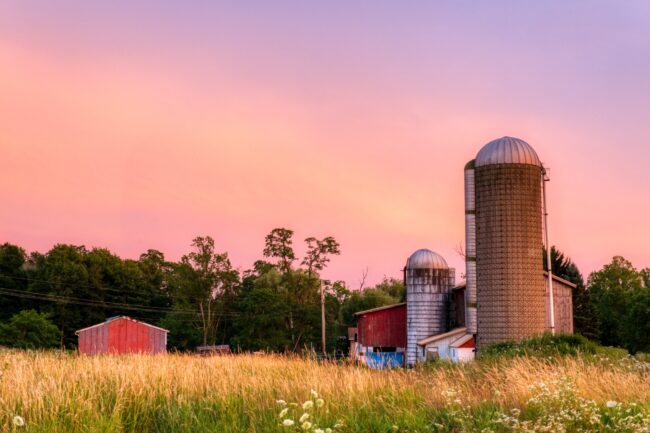
If it happens on a farm or in a field, the Extension Institute of Agriculture works with you to achieve better results. Our innovative dairy management programs range from genetics to farm and business management. Extension researchers work hand-in-hand with row crop, forage, and fresh produce growers to provide best practices for every aspect of the growing phase. We also advise communities on using sustainable practices to create inviting spaces free from invasive species.
Crops I Manuel Pena, Regional Dairy Educator
An educational station for youth and other agricultural agents, where attendees learned about the general programming of Extension but also about the Mooving Cows app, that supports the active training of cow handlers at dairy farms developed by Dr. Jennifer Van Os at UW Madison. They also learned about our Bilingual newsletter “BoviNoticias”, the intention is not only to promote its use but also to maintain communication/feedback with the users of it to provide the information they need to overcome their challenges.
I was invited to attend the National 4-H Dairy Conference at the Crave Brothers Farm, which is located in one of my counties and hosted participants from all around the country. The goal was to promote Extension’s programing and contribute to build a sense of community in agriculture in Wisconsin and America. The event provided an opportunity to connect directly with 4-H youth, dairy industry partners, and adult participants from across the region. We set up an educational station with information and games to engage with participants and create meaningful interactions with 4-H youth, dairy industry partners, and adult attendees. Throughout the event, I shared information about Extension programs and resources, answered questions, and facilitated conversations about agriculture and youth development opportunities. By engaging participants from across Wisconsin and the United States, I helped promote Extension programming, strengthen relationships with industry stakeholders, and contribute to a welcoming environment that fostered a sense of community within agriculture. The event also provided an opportunity to increase awareness of local Extension efforts and build connections that may support future educational and outreach initiatives.